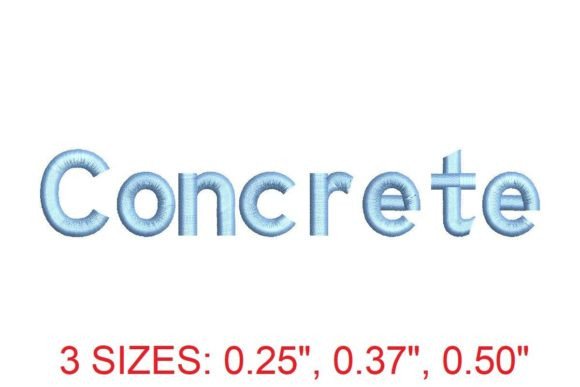
Concrete Embroidery Font: A Modern Edge for Your Stitching
There’s a specific kind of challenge in embroidery when you’re aiming for a look that feels current, clean, and unmistakably professional. Traditional script or ornate serif fonts have their place, but they often carry a vintage or overly formal weight. If your project—a tech startup’s branded merchandise, a minimalist apparel line, or a modern home décor item—calls for something sharper, the search can be frustrating. The Concrete embroidery font steps into that exact space. It’s not just a set of letters; it’s a design asset built for contemporary aesthetics, offering the precision of digital typography translated into thread.
At its core, Concrete is a sans serif font characterized by clean lines, consistent stroke widths, and geometric clarity. Its personality is direct, confident, and versatile. Think of it as the typographic equivalent of polished concrete or brushed steel—materials that value form, function, and understated sophistication. This isn’t a handwritten font with casual charm, nor is it a script font with flowing elegance. Its strength lies in its neutrality and modern presence, making it a powerful tool for logo design, brand identity systems, and any application where clarity and a contemporary feel are paramount.
Where Concrete Truly Shines: Practical Applications
The real value of a premium font like Concrete is revealed in its application. Its straightforward geometry ensures excellent legibility at various scales, a critical factor in embroidery where stitch density and fabric texture can obscure finer details. This makes it exceptionally reliable for packaging design elements on tote bags, the back neck labels on t-shirts, or monogramming on structured items like caps and laptop sleeves. The font’s urban charm doesn’t scream for attention; it asserts itself with quiet confidence.
For entrepreneurs and small business owners developing a brand identity, consistency is key. Using Concrete across digital and physical touchpoints creates a cohesive thread. Imagine it on your social media graphics as a bold headline, then embroidered on staff uniforms or customer appreciation gifts. This cross-medium consistency builds recognition and professionalism. In editorial design, it can serve as a striking display font for chapter titles or pull quotes in a printed lookbook, offering a stark, beautiful contrast to a more traditional body text serif font.
Making the Font Work for You: Pairing and Readability
A common pitfall is choosing a font in isolation. The Concrete embroidery font excels as a primary headline or accent typeface, but its true power is often unlocked through thoughtful font pairing. Its clean structure provides a perfect foundation. Pair it with a delicate script font for a wedding invitation suite where the Concrete handles the formal information and the script adds a personal, celebratory touch. For a more corporate or tech-oriented project, combining it with a highly readable serif font for body copy creates a clear visual hierarchy that guides the viewer’s eye effortlessly.
Before committing, always test. Stitch out a sample word using the letters provided in the download—the summary stats for “A” and “a” are a starting point, but the full PDF with details for all 156 letters is invaluable. Check how the font interacts with your specific fabric. A dense, stable fabric like canvas will showcase its crispness perfectly. On a more textured or stretchy knit, you may need to adjust stabilizer or underlay settings to maintain those clean lines. This hands-on evaluation is part of a professional workflow and ensures your final product meets the high standard the font itself sets.
Finally, understand the scope of your license. The Concrete embroidery font is a commercial font, designed for both personal and commercial projects. This is crucial for designers, bloggers, and business owners who intend to sell finished products. The included multiple file formats ensure compatibility with a wide range of embroidery machines, removing a technical barrier and letting you focus on the creative work. It’s a design asset meant to be used, not just admired, providing a reliable tool to elevate your projects from homemade to professionally crafted.